Powder coating in one paragraph
Powder coating is a way of finishing metal with a dry powder instead of liquid paint. The powder is a fine mix of resin, pigment and additives. It is sprayed onto the part with an electrostatic gun, so the charged particles cling to the earthed metal, and the part then goes into an oven where the powder melts, flows and hardens into a continuous film.
Step 1: Inspection and racking
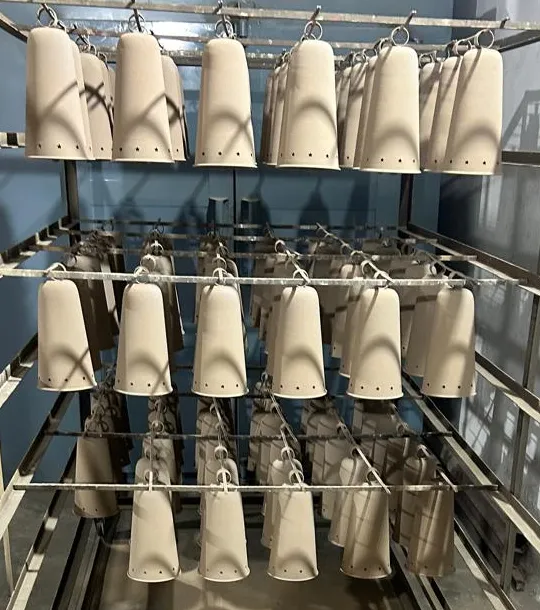
Parts are checked for weld spatter, oil, rust and sharp edges, then hung on hooks or racks. How a part hangs decides whether the coat reaches inside corners and whether hook marks land somewhere visible, so racking is planned for each design.
Step 2: Surface preparation
This is the step that decides how long the finish lasts. Oil, grease, rust and mill scale have to come off, and the metal is usually given a pre-treatment (a thin conversion layer) so the powder bonds well and corrosion cannot creep under the film. A perfect-looking coat over a dirty surface will peel.
Step 3: Electrostatic spraying
The powder is charged as it leaves the gun and is drawn to the earthed part, wrapping around edges and into recesses. Powder that misses the part can be collected and reused, which is why powder coating produces very little waste compared with spray painting.
Step 4: Oven curing
The coated parts go into a curing oven. Most powders cure at around 180 to 200 °C for 10 to 20 minutes of metal temperature, but the exact schedule comes from the powder maker's data sheet. Under-curing leaves a soft film; over-curing can shift the shade.
Step 5: Quality check
After cooling, parts are checked for coverage, shade, gloss and finish, and for any thin or rough spots, before they are packed and dispatched.
Which materials can be powder coated?
Anything that can survive the curing oven and conduct electricity is a candidate. In practice that means:
- Mild steel and iron
- CRCA and GI sheet
- Aluminium sections and castings
- Brass and copper items
- Stainless steel (with suitable preparation)
Wood, plastic, rubber and resin parts usually cannot go through a standard curing oven and should be removed before coating.
How thick is a powder coat?
A typical single coat is roughly 60 to 80 microns, noticeably thicker than one coat of liquid paint. Textured and some metallic powders run a little heavier. If your drawing specifies a thickness, mention it with your enquiry.
Written by the team at Huevex Coatings, a powder coating unit in Site-4 Industrial Area, Sahibabad, Ghaziabad.